
From Discovery to Disease:
The Right Tool for Every Patient
Our four distinct editing technologies are each designed to match the specific biology of a disease, not the other way around. This gives us the flexibility to identify what each disease requires and apply the right tool to maximize therapeutic impact.
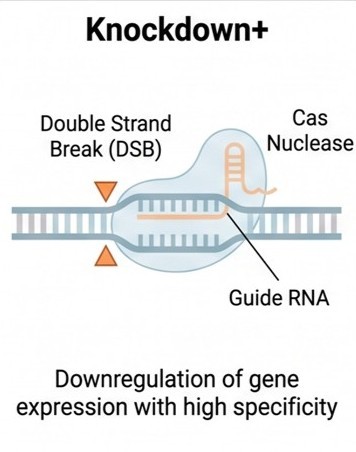
Knockdown+— For diseases driven by toxic protein overproduction
Some diseases are caused by a gene producing too much of a certain protein. Knockdown+ uses compact nucleases with precise large-deletion patterns to silence the target gene durably and effectively. Small enough to fit within a single AAV capsid, these editors are purpose-built for systemic delivery, including to the CNS.
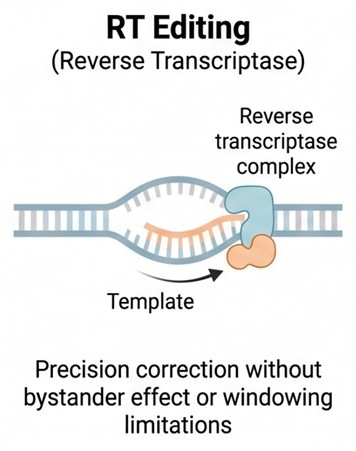
Precision (RT) Editing— For diseases requiring exact genetic correction
Some diseases are driven by a specific error in the DNA sequence, sometimes as small as a single base pair. Precision (RT) editing corrects the sequence at that exact location, without disturbing surrounding DNA. With broad PAM compatibility and no windowing limitations, this modality opens targets that other approaches cannot reach with the same fidelity.
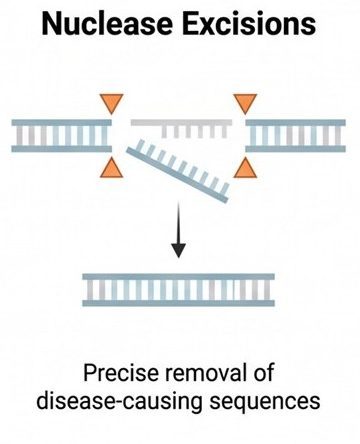
Nuclease Excision— For diseases driven by a genetic sequence that shouldn’t be there
When the disease driver is a sequence that needs to be removed entirely, such as cryptic splice sites or repeat expansion diseases, nuclease excision delivers. Our compact editors fit within a single AAV alongside multiple guide RNAs, enabling precise excision of disease-causing elements with one therapeutic.
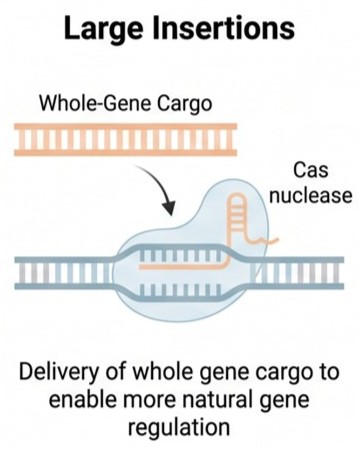
Large Insertions— For diseases requiring restoration of a missing or non-functional gene
Some diseases can only be addressed by adding or replacing genetic sequences. Our large insertion technology enables integration of functional gene sequences into endogenous loci, allowing more natural gene regulation and durable therapeutic effect. A single product can address patients with different underlying mutations.